
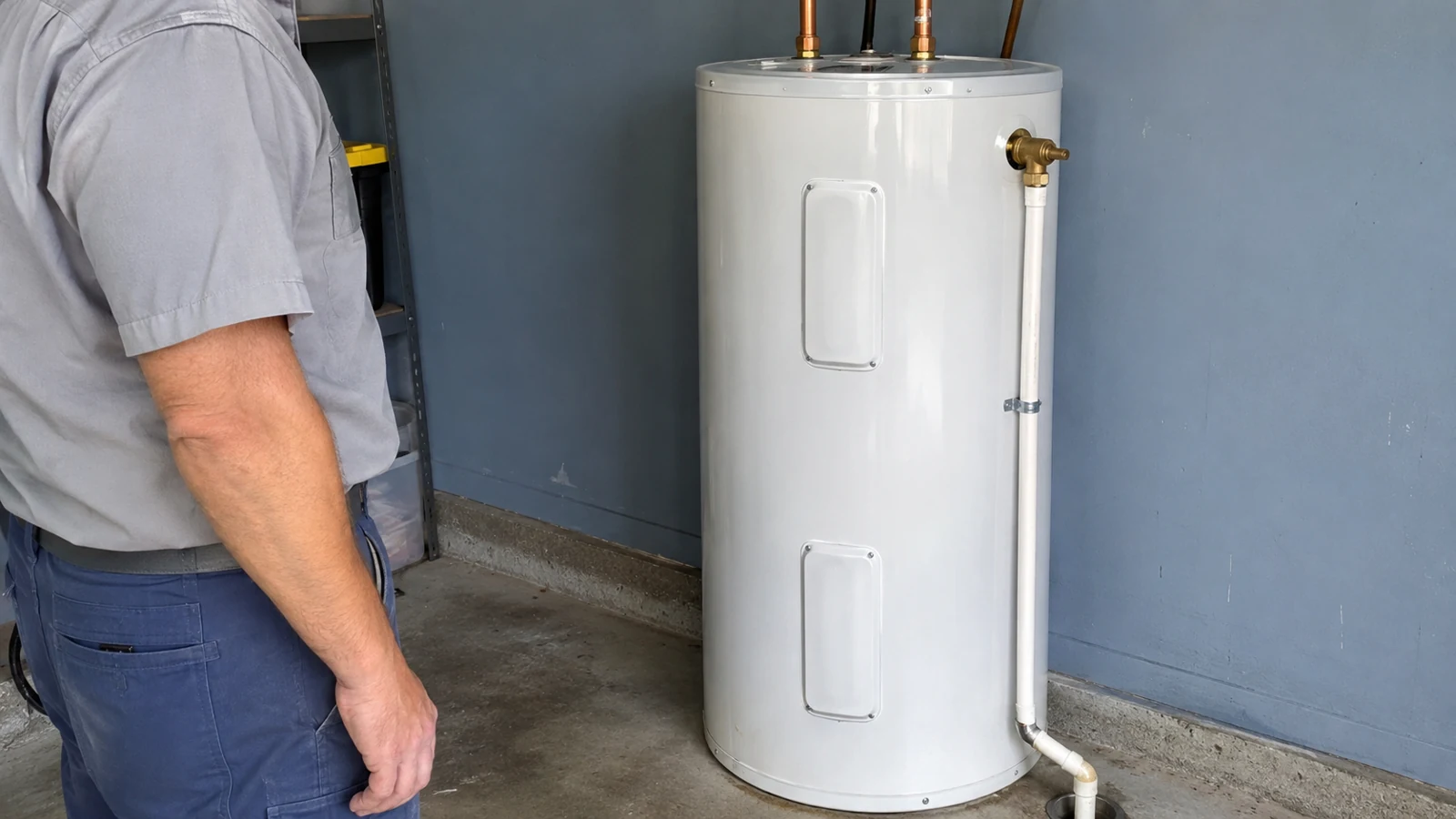

Water heater vacation mode is a reduced-temperature setting intended for times when nobody needs hot water. Whether to use it depends on your exact model, how long you will be away, and whether anyone will remain at home. Follow the manufacturer’s instructions rather than copying a temperature from another heater. A vacation setting is not a substitute for preparing an empty home for freezing weather or arranging a long shutdown.
Before a trip from Salem, it helps to answer three questions: who will need hot water, what does your heater’s manual say, and how will normal operation resume? Those answers matter more than finding a universal “away” temperature.
What vacation mode actually changes
The controls on one water heater may look similar to another while operating differently. Some models have a dedicated vacation setting with a return-day timer. The examples below show why the model number matters.
GE’s guidance for its GEOSPRING hybrid water heater describes a vacation setting that reduces the temperature to 50°F and resumes heating one day before the programmed return. By contrast, the Rinnai electric heat pump water heater manual describes a 59°F vacation setting for the equipment covered by that manual.
Those are product examples, not recommended temperatures for every home. Do not turn an unrelated heater to either number based on this article. Use the instructions for the model installed in your house, including its warnings and return-to-service directions.
Decide whether your household will really be away
A trip does not always mean an empty house. A family member staying home, a house sitter using the shower, or guests arriving before you return may still need normal hot water.
- Someone will be living at home: Plan around their hot-water needs rather than putting the heater into an absence setting.
- The house will be empty for a trip: Check whether your model’s manual recommends vacation mode for that situation and how its timer works.
- The home will be unused for an extended period: Ask a plumber about the manufacturer’s shutdown and return-to-service requirements. This deserves more planning than a quick control change.
There is no single trip length at which every water heater should switch modes. Avoid using a generic “three days” or “one week” rule unless your own manufacturer specifies it. If the instructions are unclear, get an answer before changing the controls.
A simple checklist before you leave
1. Find the instructions for the exact model
Look for the model information on an accessible exterior label, without removing covers. Use it to locate the manufacturer’s owner manual. A similar-looking control panel or an online video for another model is not enough.
Find the sections on vacation mode, extended absence, shutdown, and restarting. If the heater has no documented vacation setting, do not improvise one by changing hidden controls or opening an access panel.
2. Make a return plan
Check whether the setting ends automatically or must be changed manually. Read how your model counts days and when it begins reheating. Write down the existing mode and setting so you can follow the manual when returning to ordinary use.
For example, a late-night arrival makes return timing worth checking before departure. Do not assume a tank will be ready for several showers the moment you get home. Recovery depends on the equipment and its operating conditions, so use the manufacturer’s guidance rather than a promised universal wait time.
3. Resolve existing concerns first
If you have noticed water around the tank, an error message, or an unexplained change in hot-water supply, arrange an assessment before relying on a different operating mode. An absence setting should not be used to postpone a repair.
Not sure which instructions apply? Ask Woodward about a water heater service visit and have the model information, any visible message, and your travel dates ready. That gives the team a useful starting point without asking you to dismantle anything.
Vacation mode is not a whole-house winterization plan
A control setting on the water heater does not establish that the rest of the home’s plumbing is prepared for cold weather. For an extended absence, explain to your plumber whether the house will remain heated, where the heater is located, and whether someone will check the property.
Ask specifically about the heater, exposed plumbing, and the procedure for bringing the system back into service. Do not treat a setting labeled “vacation” as permission to shut off the home’s heat or assume it protects every pipe.
Manufacturer guidance also distinguishes vacation operation from a prolonged shutdown. Rinnai’s manual calls for professional inspection after a long shutdown and proper refilling before use. Leave draining, electrical work, gas work, and any uncertain restart procedure to a qualified professional.
What to check when you return
Confirm that the heater has returned to its normal operating mode using the owner instructions. If it has a timed vacation setting, check that the displayed mode agrees with your expectations rather than assuming the calendar handled everything.
Look for new leaks or error messages without opening the equipment. If normal hot water does not return as the manual describes, contact a professional instead of repeatedly changing settings or trying internal repairs. Do not raise the temperature above the recommended setting to hurry things along; hotter water introduces a scalding risk.
For a heater that has been shut down for a long time, follow the manufacturer’s return-to-service precautions with your plumber. That situation is different from coming home after a routine trip with the heater operating in its approved vacation mode.
Leave with a plan for your actual water heater
The useful decision is not whether vacation mode is always good or always bad. It is whether your model supports it for your absence, whether anyone needs hot water while you are gone, and whether you understand the return procedure.
If any of those answers are uncertain, contact Woodward Heating, Air & Plumbing for help planning water heater care. Get the equipment-specific questions settled before departure, so you are not trying to work them out while packing or after a long trip home.