
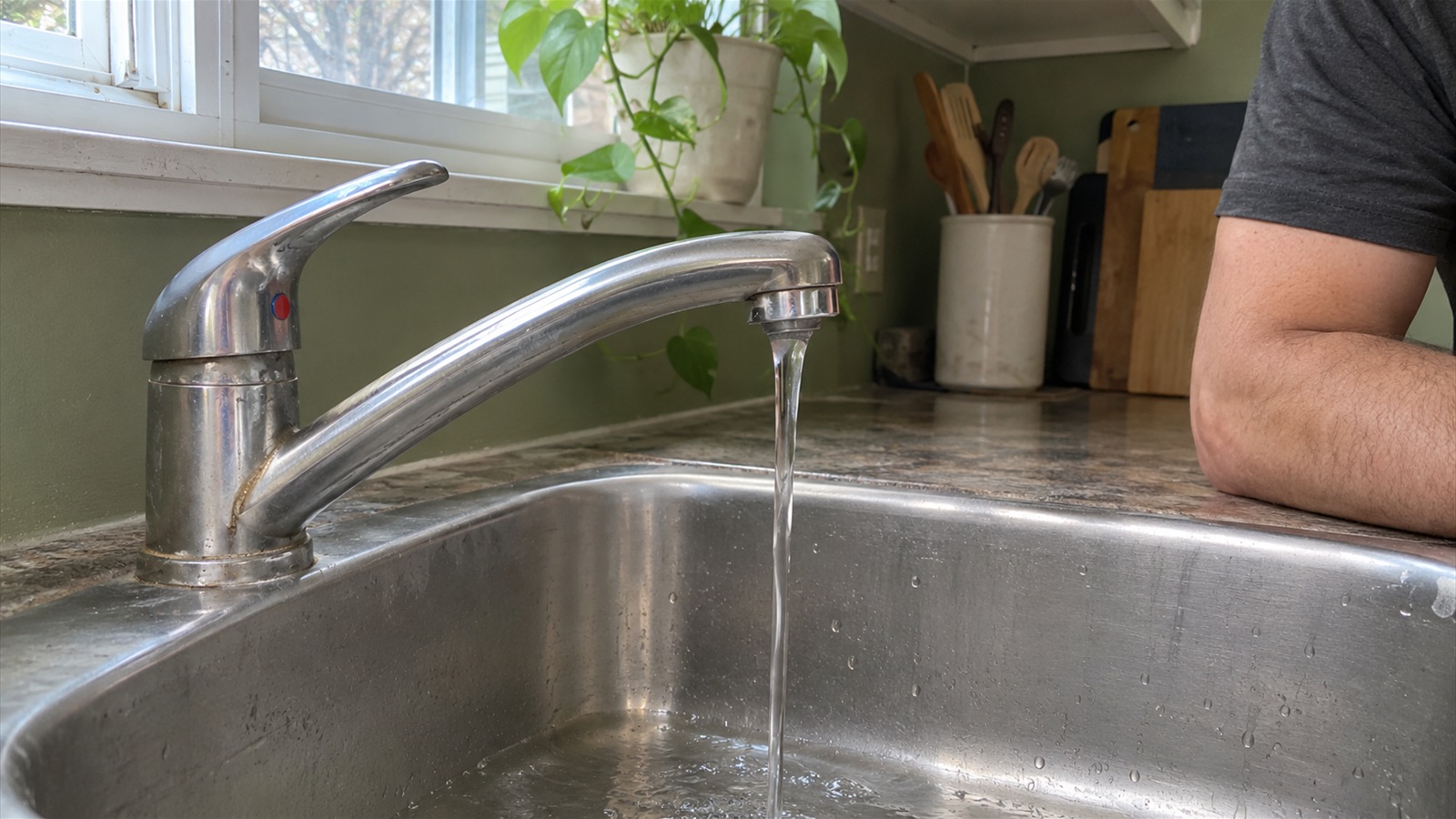

The kitchen tap runs strong on cold, but move the handle to hot and the stream shrinks to a trickle. Before you assume the water heater is failing, try the bathroom sink. That second tap can tell you whether to look at one faucet or at the plumbing that serves the whole house.
If cold water flows normally, check whether the hot-water problem affects one fixture, one part of the house, or several rooms. One weak faucet points first to its own supply or valve. Several weak hot taps with normal cold flow make a shared restriction near the heater or along the hot-water piping more likely. Neither pattern, by itself, tells you the heater needs replacing.
First, separate weak flow from water that won’t stay hot
People often call a weak stream “low pressure,” and that’s a useful way to describe what you see. A plumber can measure pressure and flow separately. For now, answer a simpler question: Is less water coming out, or does a strong stream just turn lukewarm or cold?
When the stream is strong but the temperature drops, the problem may be how much hot water is available or how the heater is operating. When the hot stream is weak even after it warms up, focus on what may be restricting its path. Turning up the heater temperature won’t remove an obstruction, and hotter settings can increase the risk of scalding.
Compare two or three fixtures before touching anything
- Start at a sink with no other water running. Compare the cold and hot streams separately at roughly the same handle opening. Keep your hands out of the hot stream. Note whether the hot side starts weak or changes after a few seconds.
- Repeat at a sink in another room. If the first fixture was a shower, a sink is a helpful second check. If both sinks look normal, tell the plumber it’s the shower that behaves differently rather than assuming the heater is at fault.
- Note what changed. Did it start after a faucet swap, water heater installation, or recent plumbing work? Did it build up slowly? Does it happen only when two people use hot water at once? These details narrow down what to check without taking anything apart.
If both hot and cold flow are weak at several fixtures, that’s a different pattern. Broader issues with the home’s supply or, in some cases, the utility can affect both sides. If nearby homes are affected too, check with your water provider rather than diagnosing the water heater.
If only one faucet or shower is affected
A healthy hot stream in the next room makes a whole-house heater problem less likely. At a single sink, the hot-side shutoff, the small line that feeds the faucet, or the faucet cartridge are all places a plumber may check. Moen’s one-sided low-flow guide makes that same distinction: verify supply to the fixture before assuming the cartridge is the cause.
Because hot and cold share the outlet on a typical sink faucet, an obstruction at the outlet is less convincing when cold flow stays strong. If a shower is the only fixture affected, its valve and model matter. Don’t force a stuck shutoff, remove a cartridge, or open the shower wall just to confirm the pattern. Tell the plumber which fixture is affected and whether anything was recently replaced.
If several rooms have weak hot water
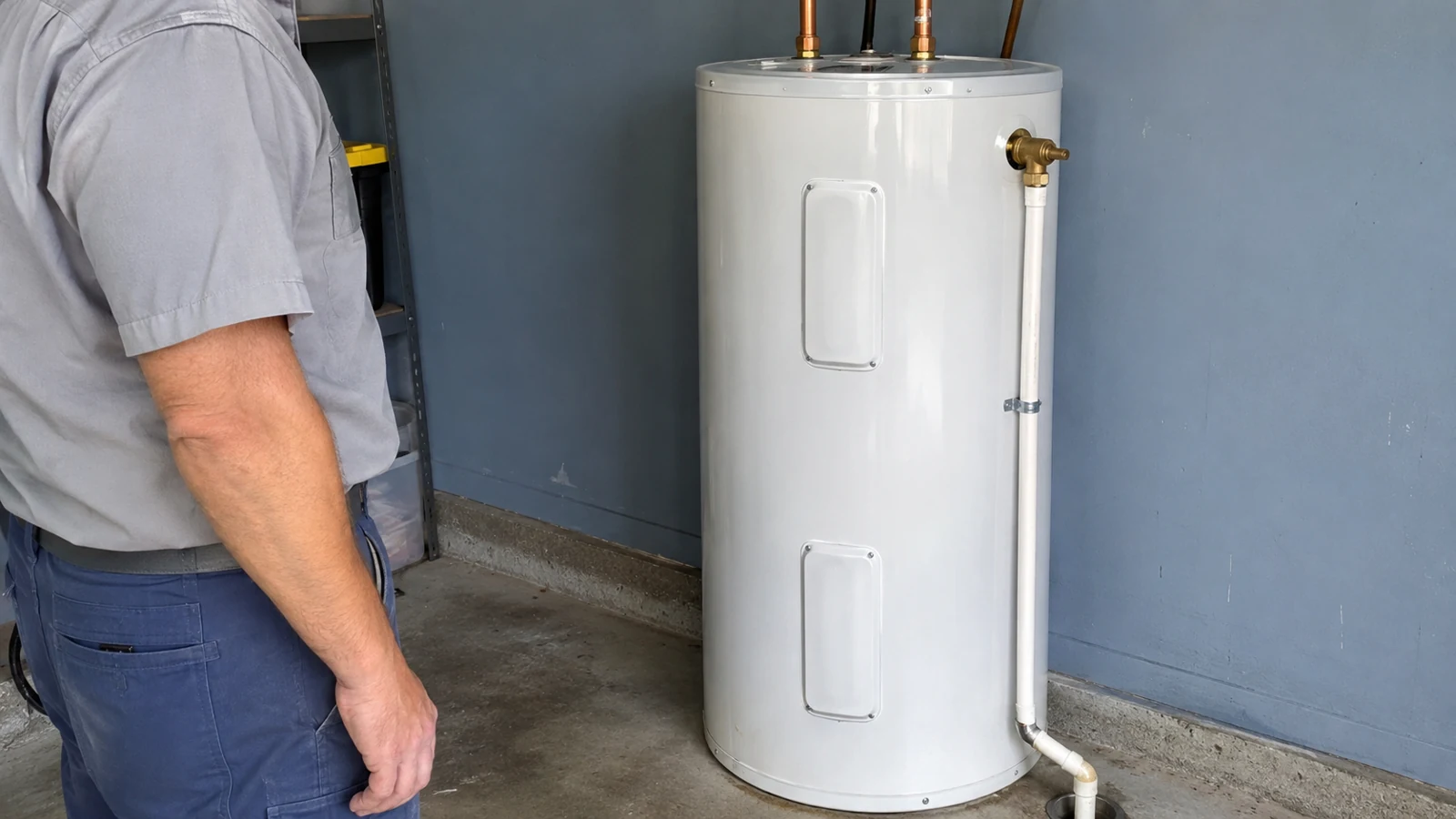
Cold water still has to enter a water heater before heated water can reach the taps. A restriction on that inlet, at a heater connection, or farther along a shared hot branch can affect more than one fixture while the regular cold taps still work. An A. O. Smith water heater manual lists a partly closed heater supply valve and certain restricted heater connections as possibilities for the models it covers. That’s a reason to check the installation and plumbing, not a diagnosis for every tank.
Don’t assume that sediment at the bottom of the tank is the answer. Less hot water available over the course of a shower and less water coming out of the tap are different symptoms. If the issue began right after a heater installation or service visit, mention that timing. The installer can verify the valve and connections without your opening the unit or disturbing the piping.
For a tankless heater, add one detail: does the stream get weaker, or does it keep flowing while the temperature drops? Some models need a minimum flow to heat water. Rinnai’s tankless FAQ explains that very low flow can affect activation and that an inlet filter can restrict flow if it collects debris. Record any displayed error code for the technician. Avoid opening the heater or trying to flush it to see if the symptom goes away.
If the same weak stream shows up in several rooms, see Woodward’s Salem plumbing services for help narrowing it down.
What to tell a plumber, and when not to wait
If the only issue is a weaker stream and there’s no active leak or other warning sign, give the plumber the fixture list, what cold does at each one, and when you first noticed the change. Mention whether hot water is weak immediately or only when another appliance or tap is running. That gives the technician a place to start before recommending a repair or replacement.
If you notice active leaking around the heater, very hot water discharging from its relief pipe, or water near electrical equipment, stop troubleshooting and contact a qualified professional promptly. Keep clear of hot discharge and wet electrical equipment. Never cap or plug a relief valve or its discharge pipe.
If you’re in the Salem area and still have low hot-water flow after comparing fixtures, contact Woodward Heating, Air & Plumbing and select Plumbing Service. Tell us where the hot stream weakens and where cold flow is still normal.