

The bedroom is getting colder, but the mini split says it’s on. Before you assume the whole system has failed, check one thing: Is the bedroom the only room that lost heat, or are all the indoor units affected? That distinction gives you a better place to start than switching the system off and on again.
- One cold room: Compare its settings and airflow with a room that’s still heating.
- Several cold rooms: Check what the controllers are asking for, especially if the units share outdoor equipment.
- Persistent loss of heat or an error: Record the symptoms and call for service rather than trying to reset the system.
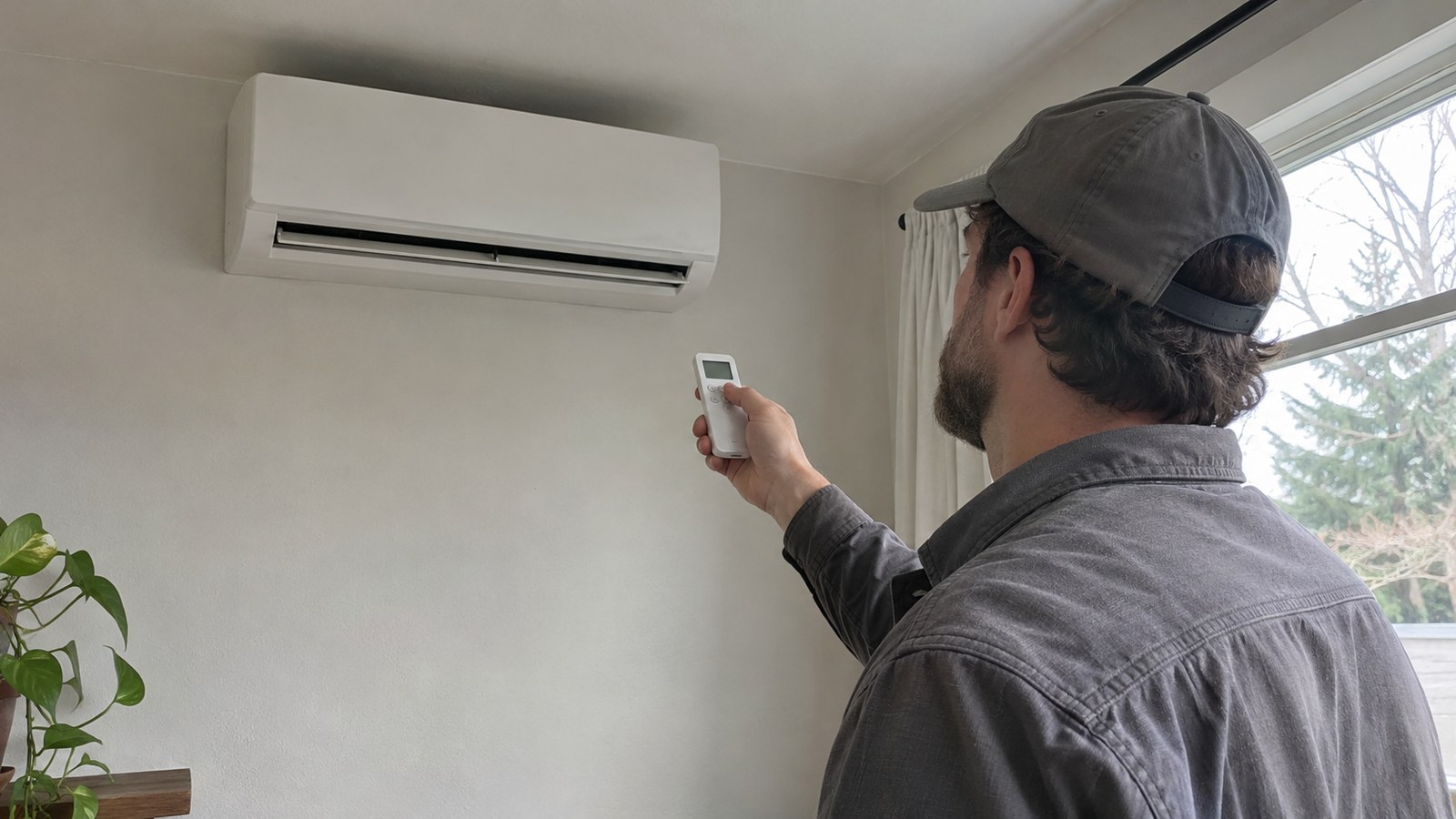
Start with the remote: Is the unit asking for heat?
Select Heat mode and set the target a few degrees above the current room temperature. Use Heat rather than Auto for this check. Auto operation varies by model, and using Heat takes one variable out of the test. Fan mode can move room air without heating it. Also check for a timer or app schedule that may have changed the mode or temperature.
Check the indoor unit or controller to confirm the setting took effect, then give the system time to respond according to its manual. Some indoor fans delay airflow at startup until the unit has warmed up. Avoid flipping between modes or repeatedly restarting the system while you wait. The useful observation is whether the unit settles into heating and the room starts to recover.
If one mini split zone isn’t heating
Check another indoor unit you know normally heats. Put both units on Heat, with each set above its own room temperature. If one room begins to warm and the other keeps getting colder, note which unit responded. A working room doesn’t tell you what’s wrong with the cold one, but it gives the technician a useful comparison.
In the cold room, compare what you can see and feel without taking anything apart. Is the affected unit moving air? Is a curtain or tall piece of furniture blocking the inlet or outlet? Is the air reaching the room, or does it feel warm only when you stand right in front of the unit? Note whether the room stays cold with the door open as well as closed, particularly if the indoor unit is actually in the hallway or an adjoining space. Moving heat into an unserved room is a different problem from an indoor unit that can’t heat the room it serves.
If airflow is weak, check the owner’s manual for its filter-care instructions. A visibly dirty filter can restrict airflow, but only clean a filter the manual identifies as user-serviceable, following its shutdown, cleaning and reassembly directions. Leave service panels, wiring and refrigerant lines alone. If airflow is still weak or the room continues getting colder, note that rather than trying to diagnose the part yourself.
If several zones stop heating together
On some multi-zone systems, several indoor units share one outdoor unit and can’t heat and cool at the same time. A zone set to Cool can conflict with another calling for Heat. A Mitsubishi Electric operation manual gives an example where the controller’s mode icon blinks during that conflict. The example is specific to the models in the manual. A blinking light on your equipment could mean something else.
If you know the affected units share an outdoor unit, check each controller and put the zones you’re testing in Heat. Check any app schedule as well, since it could switch a zone back. If you’re unsure which units share equipment, don’t infer the layout from the number of remotes. Write down which rooms are affected and let the technician confirm the layout. On a single-zone system, you can skip the mode-conflict check.
From a safe distance, look for obvious blockage around the outdoor unit, such as a drift against it or debris piled up near it. Don’t reach into the cabinet, remove any cover or try to chip ice off the coil. Tell the technician if several zones went cold together, especially if they still won’t heat after you’ve confirmed their settings.
How to tell a short pause from an ongoing problem
In cool, damp weather around Salem, a heat pump may briefly interrupt indoor heat to clear frost from its outdoor coil. That can be a normal defrost cycle if heat returns and the rooms recover. Don’t judge it by a fixed number of minutes; check the manual for your model and pay attention to whether the system resumes heating. Persistent ice, repeated interruptions without recovery or rooms that keep getting colder are reasons to call.
Likewise, cool-feeling air in isolation tells you less than what the room does over time. If there’s no fault indication and the room starts warming toward the target after startup, keep observing. If the room temperature continues to drop while the controller is set to Heat and calling for it, ask for service.
What to write down before you call
- Which rooms lost heat and which still warmed up.
- The Heat setting, target temperature and actual room temperature, if you can measure it.
- Whether the fan stayed off, moved weak air or moved air without warming the room.
- Any exact code, light pattern, ice buildup or unusual noise you noticed. A photo or short video can help.
Record the code or light pattern before doing anything that might clear it; don’t reset the system just to see whether it comes back. If you notice an electrical burning smell, stop using the unit and call for service. If there is smoke indoors or an active fire, leave and call 911 from a safe location. If the house is losing heat and you’re concerned about someone’s safety, arrange a warm place to wait and call promptly.
If your mini split still isn’t heating after these checks, contact Woodward Heating, Air & Plumbing for ductless heat pump repair in Salem. Tell us whether it’s one zone or every zone and what happened when you selected Heat.