
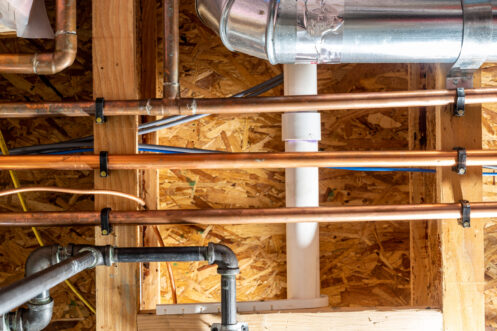
CPVC pipes have helped many older homes move away from metal plumbing. However, they do not last forever. Years of hot water exposure, mineral deposits, and installation flaws can add up to leaks, discoloration, and water damage. Knowing when warning signs point to a bigger repipe conversation keeps you from chasing one repair after another. At Woodward Heating Air Plumbing, in Salem, OR, we walk you through what failing CPVC looks like so you can decide when a whole-home solution makes more sense than another repair.
How CPVC Ages
CPVC is durable and resistant to corrosion. This is a big reason why so many homes end up with it in the first place. It stands up to hot water better than regular PVC and does not rust like steel. Even so, plastic changes with years of use and service. Hot water running through the same branches day after day stresses the pipe’s walls. Chlorine in treated water can react with the material. In some homes, the original installer may have used too much glue at the location of fittings or twisted pipes into place. This can result in strain at connecting points. In most cases, these issues are located behind walls. Without professional attention, you may not know what’s going on until a leak occurs.
Climate matters as well. In Oregon, cool nights, damp air, and shifts between heat use in winter and cooler fixtures in summer impact your plumbing system. Areas of plumbing that pass through crawlspaces or unheated garages feel more of that temperature swing. CPVC does not handle physical impact very well. Pipes that rub against framing or sit under constant tension tend to age faster. When the material reaches a certain stage, it loses flexibility. A pipe that used to bend slightly now has a more rigid composition. That is when you can start to see hairline splits, noisy joints, and fittings that fail even after you have repaired sections.
Hairline Cracks, Weeping Joints, and Stains
Many CPVC failures start as very small leaks. You might see a faint brown or yellow stain on the ceiling below a bathroom or laundry area. Paint may bubble a little, or a corner of a wall near a shower might feel softer than it used to. If you investigate a basement or crawlspace, you may spot a drop of water hanging from a pipe fitting. There may be a ring of dried mineral crust around an elbow. These weeping joints often feel dry when you touch them, since the water evaporates between drips, yet they tell you that the pipe wall or glued joint has started to break down.
Hairline cracks along straight runs of CPVC can be even harder to spot. Sometimes they run along the top of a pipe where you cannot see them from below. As you repair one section, another crack shows up a short distance away. If you have lived in the home for a while and you can remember minimal issues with leaks, a single repair may be enough. When you begin to see multiple stains, repeated pinhole leaks, or joints that weep even after careful work, issues have spread through a larger area.
Discolored Water and Changing Temperatures
Warning signs do not always show up on the outside of pipes. Sometimes they appear right at the faucet. If you run water in the morning and notice a cloudy burst that clears after a few seconds, that can come from air in the line or harmless sediment. When you start to see regular discoloration, small plastic shavings, or a faint chemical smell coming from hot water taps, your plumbing system deserves attention. CPVC that has aged badly can shed tiny flakes of material or allow buildup inside bends where water does not move as quickly.
You might also notice strange temperature behavior at fixtures that used to feel steady. A shower that used to hold a comfortable setting now swings between cooler and hotter as other fixtures open and close. Kitchen taps may lose hot water faster than they used to because a narrow section of pipe restricts flow. While water heaters and mixing valves can cause some of these changes, old CPVC is often part of the picture. As internal surfaces become rough and scale collects, friction increases. Water no longer moves through the system in a smooth, predictable way. If your water heater checks out and those changes continue, a plumber may want to look closely at CPVC branches that feed those fixtures.
Noisy CPVC Pipes, Movement, and Support Problems
Sounds from behind walls can also hint at trouble in CPVC runs. All plumbing makes some noise when water moves. You may hear a gentle whoosh when a shower starts or a quick knock when a washing machine shuts off. With aging CPVC, those sounds can grow sharper. You might hear popping or ticking as hot water flows through a line and the plastic tries to expand and contract against tight holes in the framing. You might notice a louder, repeating bang when someone closes a faucet quickly and the water momentum hits an abrupt stop.
Noise alone does not mean pipes need to be replaced. Yet, it often points to movement and stress. CPVC needs proper support and room to move slightly at hangers and through holes. In some homes, builders strapped it tightly to studs or ran it through small notches that pinch the pipe when it expands under hot water. Years of that movement wear down the material where it rubs, which raises the chances of cracks. A plumber can inspect exposed areas, such as basements or mechanical rooms, and get a sense of how the rest of the system might behave in finished spaces. If they find flat spots, rubbing, or severe bending, those observations often lead to the recommendation of repiping.
Planning Around Renovations and Access
Timing matters when you think about replacing CPVC. If you have already planned a bathroom update, new kitchen cabinets, or fresh drywall in a hallway, this provides access to pipes. Opening walls once for both projects is favorable compared to cutting in multiple times after new finishes go up.
You also have a chance to move shutoff valves to more convenient spots and clean up awkward pipe routes that made no sense in the first place. When you talk with your contractor about tile, flooring, or cabinetry, include a quick question about plumbing access.
Know When to Talk About Repipe Options
CPVC problems rarely show up as one isolated leak. More often, you see a pattern of pinhole leaks, cracking at fittings, changing water color, and repairs that do not seem to hold. At Woodward Heating Air Plumbing, we help you sort through signs of trouble, review your home’s plumbing layout, and choose materials and timelines that benefit you.
If you are ready to stop worrying about what is happening inside brittle CPVC lines and move toward a more reliable plumbing system, schedule your repiping consultation with Woodward Heating Air Plumbing in Salem today.