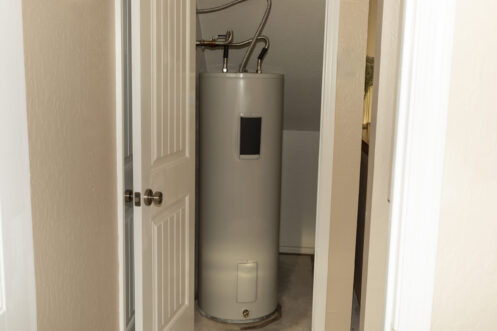
Your water heater is a big investment as well as a necessity for daily activities. You need hot water for showers, dishwashing, and laundry. To make the most of your current hot water system, it’s important to understand the most common risks of water heater failure. Furthermore, you need to know when it’s time to replace it.
Internal Corrosion
Internal corrosion in a water heater sneaks up quietly. You might notice rusty water, metallic smells, or popping sounds during heating. That’s corrosion eating away inside the tank. We inspect the anode rod, fittings, and tank walls to see what’s happening. If corrosion is limited, we can replace parts and flush the system. That often buys you time.
When corrosion spreads, repairs won’t hold. Leaks start, efficiency drops, and failure becomes likely. At that point, replacement makes sense. We help you decide without pressure. You’ll get clear options, honest advice, and a solution that fits your home. We want your hot water to be reliable, safe, and ready every day.
Sediment and Mineral Buildup
Sediment and mineral buildup are common water heater problems. You might hear rumbling or popping during heating cycles. That sound comes from minerals hardening at the bottom of the tank. We often see it in hard-water areas. The buildup blocks heat transfer, forcing your system to work harder.
When the buildup is light, repair makes sense. We can flush the tank and remove loose sediment. That improves efficiency and quiets the noise. We also check heating elements and valves. If parts still look solid, a repair can restore performance and extend the heater’s life.
Heavy buildup changes the conversation. Thick layers trap heat, causing the tank to overheat. Efficiency drops, recovery slows, and energy bills climb. You may notice inconsistent hot water or a short supply of hot water. At that stage, repairs won’t entirely solve the problem. The damage usually keeps spreading.
That’s when replacement becomes the smarter option. We’ll walk you through it calmly and clearly. You’ll know what failed and why. We help you choose a unit that fits your home and water quality. Our goal is simple. You get reliable hot water without wasted energy or surprise breakdowns.
Excessive Water Pressure and Heat
Excessive water pressure and heat put your water heater under constant strain. As water heats, it expands. If there’s nowhere for that expansion to go, pressure rises fast. You won’t see it, but the tank feels it every cycle. We often catch this early during water heater inspections.
Overheating adds another layer of risk. Mineral buildup traps heat at the bottom of the tank. A faulty thermostat can also let temperatures climb too high. You might smell hot metal or feel scalding water at the tap. That heat creates steam and extreme pressure inside the tank.
Your system relies on a temperature and pressure relief valve for safety. When it works, it releases excess pressure. If it’s clogged, worn, or overwhelmed, it can fail. That’s when things get dangerous. We test these valves every time because they matter.
Incoming water pressure causes trouble, too. Pressure over 80 psi stresses the tank, fittings, and internal parts. You may hear banging pipes or notice small leaks. That noise, called water hammer, signals sudden pressure changes. Those swings weaken seams and force the relief valve to open repeatedly.
When pressure and heat combine, failure happens faster. Seams crack. Leaks start. In extreme cases, tanks rupture violently. That risk isn’t worth ignoring. If damage is limited, repairs can help. We may install a pressure regulator, add an expansion tank, or replace safety components.
Sometimes replacement is the safer move. Long-term pressure and heat damage weaken the tank structure. Repairs won’t restore strength. We’ll explain what we see and why it matters. You’ll get clear choices, not pressure. Our goal is simple. You stay safe, protect your home, and enjoy reliable hot water every day.
Component and Supply Issues
Component and supply issues can make a water heater feel unreliable fast. You turn the tap and brace for surprises. A faulty thermostat is a common culprit. When it fails, the heater may not shut off. Water overheats, safety switches trip, and the tank takes stress. We test thermostats carefully and replace them when needed.
Dip tube problems are quieter but just as frustrating. That tube should push cold water to the bottom of the tank. When it cracks, cold water mixes at the top. You take lukewarm showers and believe the water heater is at the end of its life. We inspect the tube before jumping to replacement. A simple repair often restores normal performance.
Gas models bring their own challenges. A bad thermocouple or dirty pilot tube can stop the burner. You may smell gas or hear clicking without ignition. We clean, test, and replace components when it’s safe and effective.
Sometimes repairs aren’t enough. Repeated part failures or supply damage signal a larger issue. At that point, replacement protects your comfort and safety. We explain the difference clearly so that you can choose with confidence.
When To Replace a Water Heater
Knowing when to replace a water heater isn’t always clear. You notice changes first. Hot water runs out faster. Rusty water shows up. Strange noises start. Traditional tank heaters usually last eight to twelve years. If yours is at that age, replacement often makes more sense.
Leaks change everything. Water pooling at the base means the tank has failed. Repairs won’t stop it. Discolored water or visible corrosion also points to deeper problems. Those issues don’t improve with patchwork fixes.
We look at repair costs, age, and reliability together. Major repairs on older units add up quickly. That money works better toward a new system. We help you compare options without pressure.
With replacement, you get steadier hot water and fewer breakdowns. Energy efficiency improves, too. You’ll feel the difference every day. Our goal is simple. You get comfort, safety, and peace of mind.
When To Call Woodward Heating Air Plumbing for Water Heater Services
When your water heater acts up, stress follows fast. Cold showers don’t wait. We get that. At Woodward Heating Air Plumbing, we help homeowners in Salem quickly restore comfort. We inspect the problem, explain what’s happening, and walk you through options. You won’t feel rushed or pressured.
We handle repairs and replacements for water heaters. If a fix makes sense, we do it right. If an upgrade helps more, we explain why. We also install energy-efficient tankless systems when you’re ready. As a second-generation, family-owned company, we value honesty. We back our work with a satisfaction guarantee.
You’ll get upfront pricing, financing on approved credit, and online specials to lower costs. When you call us, you’re in good hands.
Contact Woodward Heating Air Plumbing in Salem today for more information on our water heater services.